Skill or Luck? Testing my green tea processing a second batch
Through the first ‘batch’ (is 3g considered a batch?) many lessons were learned, which you can discover in part 1.
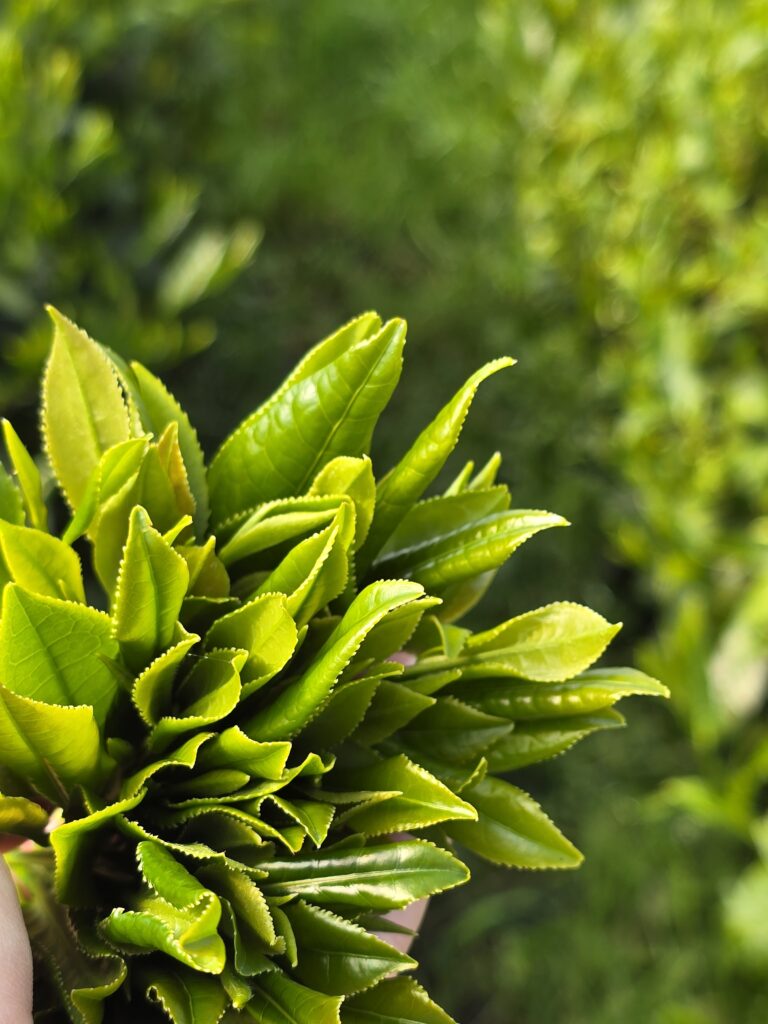
Two weeks later it was time for the next black tea pick. The plants were doing really well in the polytunnel and there were many young shoots coming up. This meant it was easier to pick as we did not have to search for shoots.
Donald was delighted with this increased growth, it also ensured that there would be leaf material for my green tea experiments without hindering black tea batches. This time 252g of fresh leaf was plucked for me to continue my green tea research.
Guisachan farm to Inverness is about 50 minutes drive and on this July day the sun was shining fiercely.
Amazing conditions for sun withering experiments. However as soon as the leaf is picked it begins the withering process, because it’s no longer attached to the plant. To try and slow this process I put it in the foot well of the car with a breathable cloth covering, and the air conditioning on for airflow.
That was a rather slow careful drive back to Inverness along the twisty roads on the side of Loch Ness. Thankfully the leaf still looked fresh by the time I got home.
On returning home I weighed the leaf to see how much water was lost (essentially what withering is) and a very reasonable 5g of weight was lost during the car journey.
The leaf was then transferred to a pop up hanging herb dryer. Cue me chasing the sun around the garden to get a good sun wither. Not the most professional setup but it worked!
As a result of my discussion with tea producers, I’d landed on the idea of 85% to 80% wither which means that 15 to 20% of water is lost from the fresh leaf.
In hindsight I could probably have stopped it earlier, but I persevered with an extra 30 minutes in the sun and got to that 15% loss target.
Next stagekill-green
Into the pan it went. I can’t lie this was mildly terrifying, as I was acutely aware that this was the key point where I’d overdone it last time.
It turns out that panfiring is much easier with more leaf, with the increased volume of leaf in my wok meant I could get the leaves moving more.
The withered leaf was pan fired until it started changing colour. This time I didn’t leave it in until it crumbled, and I was advised to listen, as when the moisture comes out of the leaves they start crackling. This concerned me that the leaves were cracking and overdrying again. Thankfully Matt was in my phone, assuring me this was normal and just the sound of water leaving the leaves. After pan firing and my brain niggle that the kill green process was not fully complete, I added the warm leaves to my muslin square.
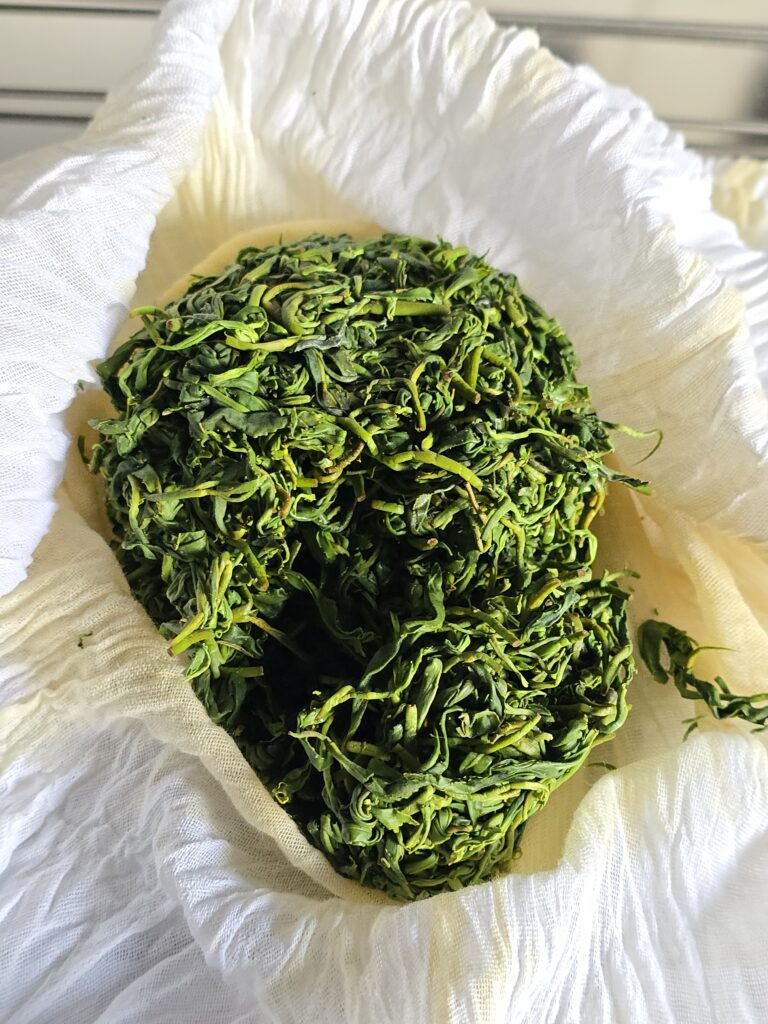
Turns out that rolling in muslin is much easier than trying to roll between your hands.
Just look at the difference
I continued muslin rolling until I felt that the scent had changed enough. A sticky feeling also develops due to the leaf releasing saponins as the cell walls are broken a little. The Renegade packet told me they rolled for 30 minutes. But instinct suggested to stop at this shorter time. At this point I put the Renegade guide aside and turned my attention to the leaves.
Rolled leaves emerging from muslin are sticky and wet. Add this into my concern about the kill green stage failing, it was thus ‘experiment time’. So I took a handful of leaf and added it back into the wok. Then I pan fired it until it started drying out more, let’s double down on the heat and halting those enzymes.
During this second pan firing, the scent evolved, with creamy notes beginning to surface from the leaf. Taking these new creamy notes as a sign to stop, I removed these from the wok and added them to the dehydrator, drying at 70° for an hour and a half.
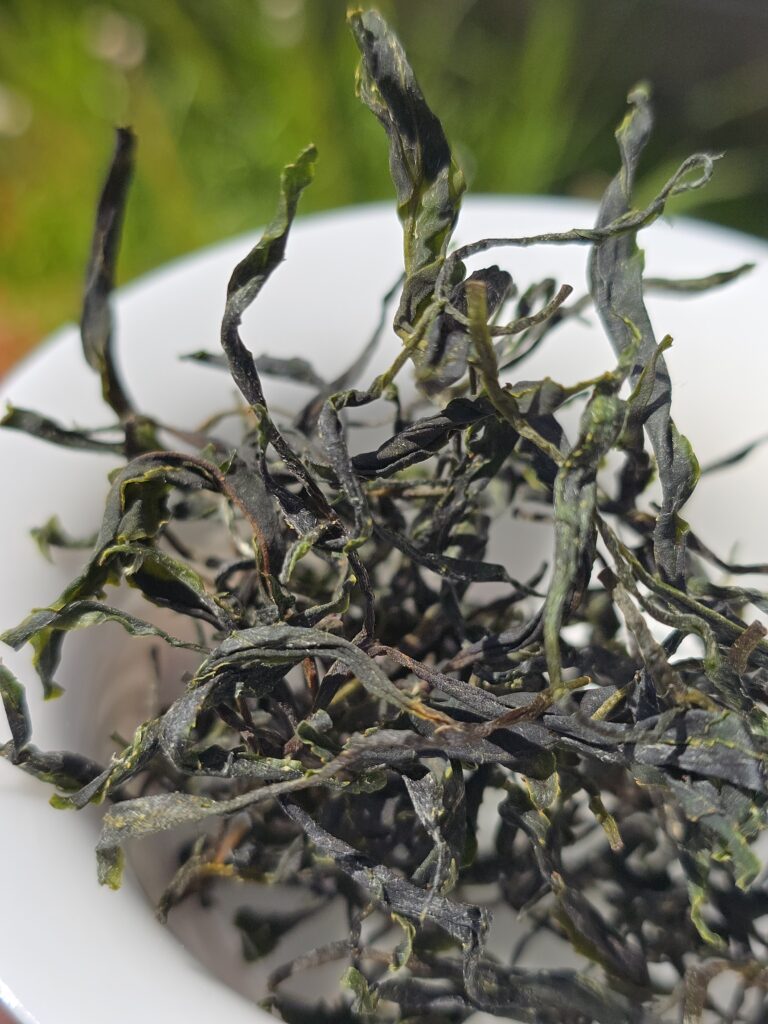
To prevent myself from prodding the leaf I went for a walk. When I returned it was dry. My dehydrator is not a big industrial one, it dries my delicate elderflower happily, but I wasn’t sure how it was going to work with tea. Again my fears were unfounded, just look at the tea leaves, these twisty little fingers and it even smelled amazing.
Result! This second batch resulted in a total of 64g finished tea, from 252 grams of fresh leaf.
Next challenge...scalinghow big can we go
At this point I realised larger scale production may present issues, due to the limited tools we have access to. This is not going to be a kilogram creation in one batch, more likely we’ll be looking at producing up to 300g of dry leaf each batch.
Processing this up at Guisachan would be beneficial for a number of reasons. Starting the withering process as soon as it’s picked, means removing the car wither variable. With the efficient industrial dryer, will ensure the leaves are dry faster which in theory may lock in more flavour. Let the experiments continue…
Discover the next installment
Join our tea mail family, and part 3 will appear in your inbox on release